
Episode 4 – Wine Notes
English Fizz
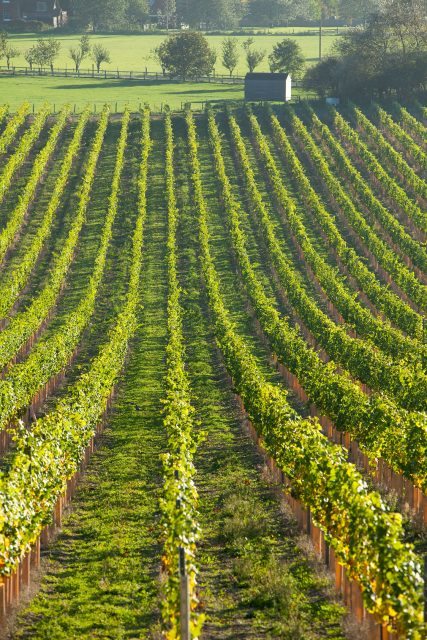
There has been an explosion in the production of English wine led by producer Nyetimber some 25 years ago. The limestone chalky soils of Sussex, Kent and other portions of southern England are suitable for growing the grapes used to produce sparkling wine, and particularly on south-facing slopes, the climate, at least in recent years, is warm enough. At the last official count, the Wine Standards Board reported that there were just over 450 vineyards producing wine throughout England. The largest of these is Denbies Vineyard in Surrey which, as of mid-2007, has 265 acres (1.07 km2) of vines, although Chapel Down Wines near Tenterden in Kent, has the biggest winery and produces more wine.
Here is a rundown of some of the more noteworthy producers but there are new ones every year
For more information – http://www.englishwineproducers.co.uk
The champagne method of production involves a quick pressing to keep the colour pale then fermented twice. First in a more traditional wine making way in barrels or casks then a second stage in the bottle with the addition of additional sugar. The bottle are stored horizontally in cellars and left for at least 15 months and up to 3 years. Non-vintage champagne must be aged on the lees in the bottle during that time and the lees are removed via disgorgement, a process involving slowly turning the bottle vertical as the lees solidify in the neck. The process of disgorgement was invented by Madame Cliquot in 1816 and before this champagne was cloudy.
Modern automated disgorgement is done by freezing a small amount of the liquid in the neck and removing this plug of ice containing the lees.
Noval Nacional 2011
Port is a Portuguese wine produced exclusively in the Douro Valley in Portugal. In the late 19th century the phylloxera epidemic destroyed most of the vineyards for wine grapes in Europe, most notably in France. Phylloxera was introduced to Europe when avid botanists in Victorian England collected specimens of American vines in the 1850s. Because phylloxera is native to North America, the native grape species are at least partially resistant.
The vines in Quinta do Noval were planted in 1925 and so are the only ones in the region not using grafted American roots and have been produced some of the area’s most expensive wines.
Port wine is typically richer, sweeter, heavier, and higher in alcohol content than unfortified wines. This is caused by the addition of distilled grape spirits to fortify the wine and halt fermentation before all the sugar is converted to alcohol, and results in a wine that is usually 19 to 20% alcohol.
Quijnta do Noval didn’t release a wine between 2003 and 2011 due to a restructuring of the business and declining quality making the 2011 a highly sought after vintage.
The wine makers at Noval describe the 2011 – ‘With continued brilliant sunshine, this late harvest turned out to be an excellent decision. Once crushed in the lagares, the grapes revealed a wonderful deep colour, remarkable aromas and ideal sugar content and acidity: the sign of a year with immense potential.’
http://www.quintadonoval.com/categorie-quinta.do.noval.vintage.nacional
Should you wish to buy one – https://hedonism.co.uk/product#!/quinta-do-noval-nacional-vintage-2011

 The Food Group